Red Fort blast December 6 terror module: Doctors’ Revenge Plan for Babri Masjid Demolition
The Red Fort blast December 6 terror module is now at the centre of one of India’s most disturbing counter-terror investigations. According to senior officials, a terror cell comprised largely of doctors linked to Jaish‑e‑Mohammed (JeM) and Ansar Ghazwat‑ul‑Hind had orchestrated a plan to detonate bombs across the National Capital Region (NCR) on 6 December, the anniversary of the demolition of the Babri Masjid in 1992.
This blog post will walk you through the background, motives, the five-phase plan uncovered by investigators, key arrests, implications for security in Delhi, and where things stand now. Internal links to related posts on terrorism and security (see e.g., our post on the Babri Masjid verdict) as well as external sources will bolster the SEO value and reader engagement.
Why 6 December? The motive behind the attack
The date of 6 December was deliberately chosen. It marks the day when the Babri Masjid in Ayodhya was demolished by a mob in 1992, an event that has since been used as a symbolic grievance by several terror outfits.
Officials say that the members of this module openly admitted during interrogation that this date was selected “to avenge the Babri Masjid demolition”.
For years, JeM has issued threats to avenge the demolition. Analysts say that this planned attack — now labeled the Red Fort blast December 6 terror module — was not a spontaneous act but rooted in ideological symbolism.
The Five-Phase Terror Plan of the Doctor Module
Investigators have disclosed a five-phase blueprint for the attack carried out by the terror cell now at the heart of the Red Fort blast December 6 terror module investigation.
Phase 1: Formation of the terror module
The module was reportedly formed with links to JeM and Ansar Ghazwat-ul-Hind. Officials say medical professionals and highly educated individuals were recruited.
Phase 2: Procurement of raw materials
Raw materials for improvised explosive devices (IEDs) and ammunition were sourced from areas in Haryana such as Nuh and Gurugram.
Phase 3: Manufacturing and reconnaissance
The module assembled chemical IEDs and conducted reconnaissance of potential target locations—including prominent sites in Delhi.
Phase 4: Distribution of bombs
Once bombs were assembled and targets scouted, the devices were distributed among module members.
Phase 5: Execution of coordinated attacks
The final phase involved detonation of bombs across six to seven locations in the NCR on the chosen date. The original plan reportedly targeted August this year, but delays pushed the date to December 6.
The Blast at Red Fort: The Trigger Event
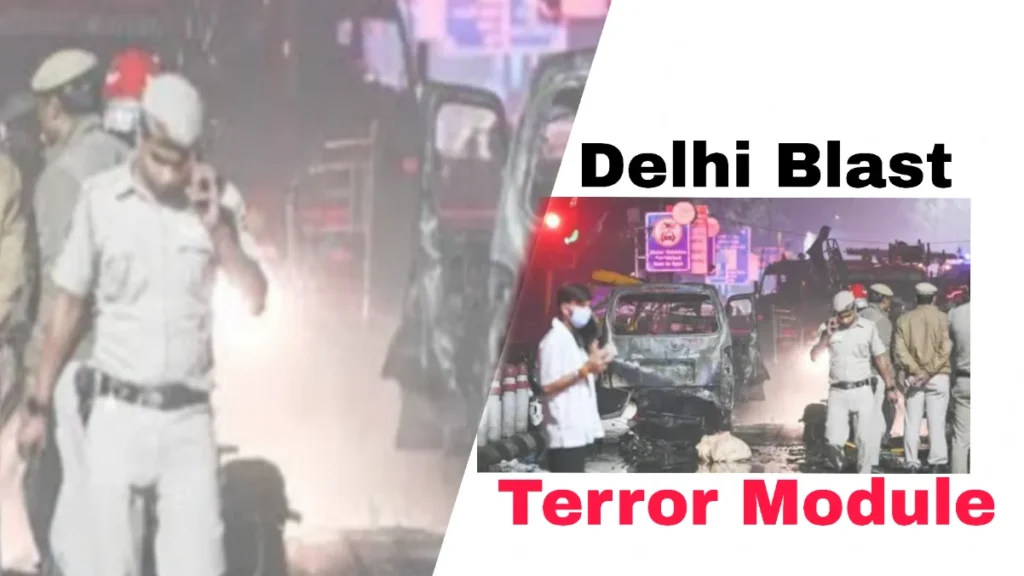
In the early evening of 10 November 2025, a car explosion near the iconic Red Fort area of Delhi turned tragedy into open investigation. A white Hyundai i20 car exploded at a traffic signal near the Red Fort Metro station, killing nine people and injuring over 20.
DNA tests have now confirmed that the driver of the vehicle was Dr Umar Un Nabi (alias Umar Mohammad), a doctor from Kashmir working at Al Falah University in Faridabad.
Police say that Umar panicked after key associates were arrested and triggered the blast prematurely. The blast site also tied back to the broader terror module’s plan.
Key Arrests and Module Riders
Several medical professionals have been arrested, bringing into sharp focus the idea of a “white-collar” terror cell operating under the cover of professionalism. Among them: Dr. Muzammil Sheikh and Dr. Shaheen Saeed (or Shahid/Shaheen variants in reports).
Investigations revealed that one of the arrested doctors had conducted reconnoissance of the Red Fort area in January.
In Faridabad, 2,900 kg of explosive material believed to be ammonium nitrate was seized during earlier raids linked to this module.
How the Red Fort Blast Fits the Bigger Terror Landscape
The Red Fort blast December 6 terror module underscores several troubling trends:
The use of highly educated professionals (doctors) in terror modules, which complicates detection and profiling.
Symbolic targeting and date-selection (6 December) that links historical grievance to terror planning.
Multi-state procurement chain (Haryana, NCR) and cross-border ideological links (Kashmir, JeM, Ansar).
Use of large-scale chemical / IED materials (ammonium nitrate recovery) pointing towards potential mass-casualty intent.
High-profile location (Red Fort / Old Delhi) for maximum shock and media impact.
The fact that this was treated as a terror incident under the Unlawful Activities (Prevention) Act (UAPA) highlights the national security gravity of the case.
Implications for Security in Delhi & NCR
Security agencies have gone on high alert across Delhi and neighbouring states. The fact that the blast occurred in the heart of the national capital signals that no location is beyond reach.
Surveillance of “white-collar” professionals is now likely to tighten, especially where links to terror or extremist ideologies may exist.
Intelligence-gathering will place increased emphasis on unusual procurement of chemical and explosive materials, car reuse, and reconnaissance footage.
Public awareness and vigilance are critical, since even a seemingly innocuous vehicle in a crowded area (traffic signal, metro station) becomes a weapon.
Inter-agency coordination (NIA, Delhi Police, state police) is being stressed given the multi-state nature of this module. (Reuters)
What Happens Next – Investigation Status & What to Watch
The investigating team will focus on identifying handlers, financiers, and network associates of the module—especially overseas contacts (Turkiye-based handlers have been referenced).
Forensic linkage (DNA, car parts, purchase history) is proving critical: DNA confirmed the driver as Dr Umar.
Material analyses of the explosives seized, reconnaissance logs, and trace of chemical sourcing will determine if the blast was part of the original December 6 plan or a precursor.
Surveillance in the NCR and nearby states will be heightened ahead of 6 December this year, given the symbolic date of the planned attack.
Political and diplomatic ramifications are emerging as agencies seek to publicly attribute responsibility and dismantle the module.
Conclusion
The Red Fort blast December 6 terror module case shocks not only because of the violence, but because of the audacity: targeting a symbolic location, using medical professionals, and choosing a historical grievance-laden date. The investigation is still underway, but the five-phase plan uncovered by the authorities gives a clear window into a sophisticated terror design.
As the probe advances, the public must stay alert, intelligence agencies must remain proactive, and the broader society should understand that terror threats can emerge from unexpected quarters. This isn’t just a security story—it’s a wake-up call about how ideology, professionalism and secrecy can combine into a lethal formula.